
TOGETHER, WE MAKE HISTORY!
The story is still being written.
An interactive world where children become History Detectives, explore real stories, ask big questions, and discover a powerful truth: ordinary people make history.
Every history maker enters differently.
Keep exploring as a young History Maker, find resources for home or classroom, or bring the live story world to your school.
I’m a History Maker
Look closely. Follow clues. Ask a big question. Invent what comes next. The story needs you.
I’m a Teacher or Parent
Find activities, conversation starters, printable resources and ways to keep the experience going after the live story ends.
Bring This World to Your School
Invite students into an interactive storytelling experience where their choices, questions and ideas become part of what happens next.
Young visitors can explore without creating an account or sharing personal information. Grown-ups can use the educator and school paths for resources and booking.
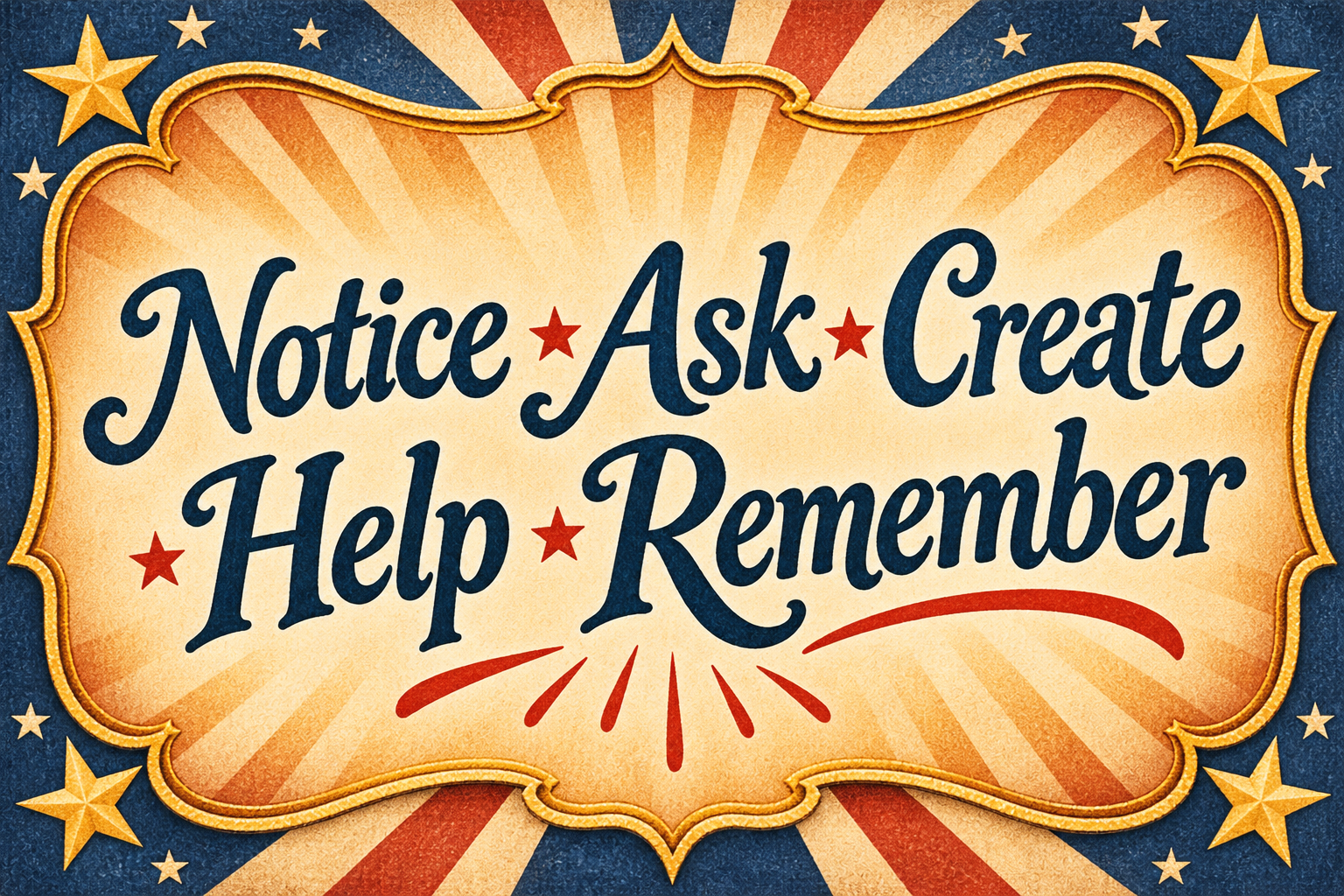
Five ways to help write what happens next.
These five keys guide the live experience, the activity book and the story world. Tap one and try it.
NOTICE
Look closely.
TRY THIS →
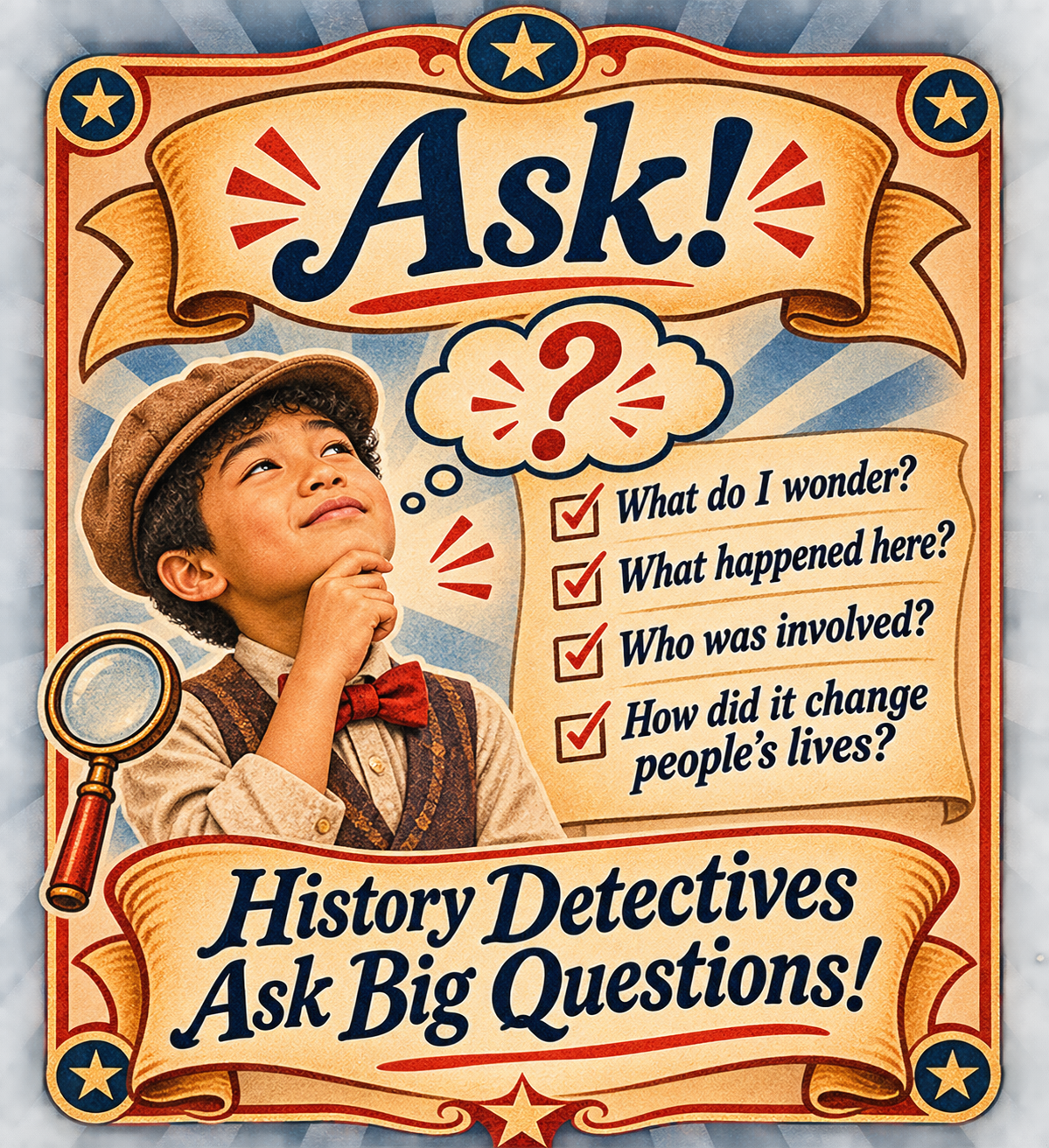
ASK
Be curious.
TRY THIS →
CREATE
Try an idea.
TRY THIS →
HELP
Make a difference.
TRY THIS →
REMEMBER
Keep the story going.
TRY THIS →
NOTICE
Look closely at something ordinary.
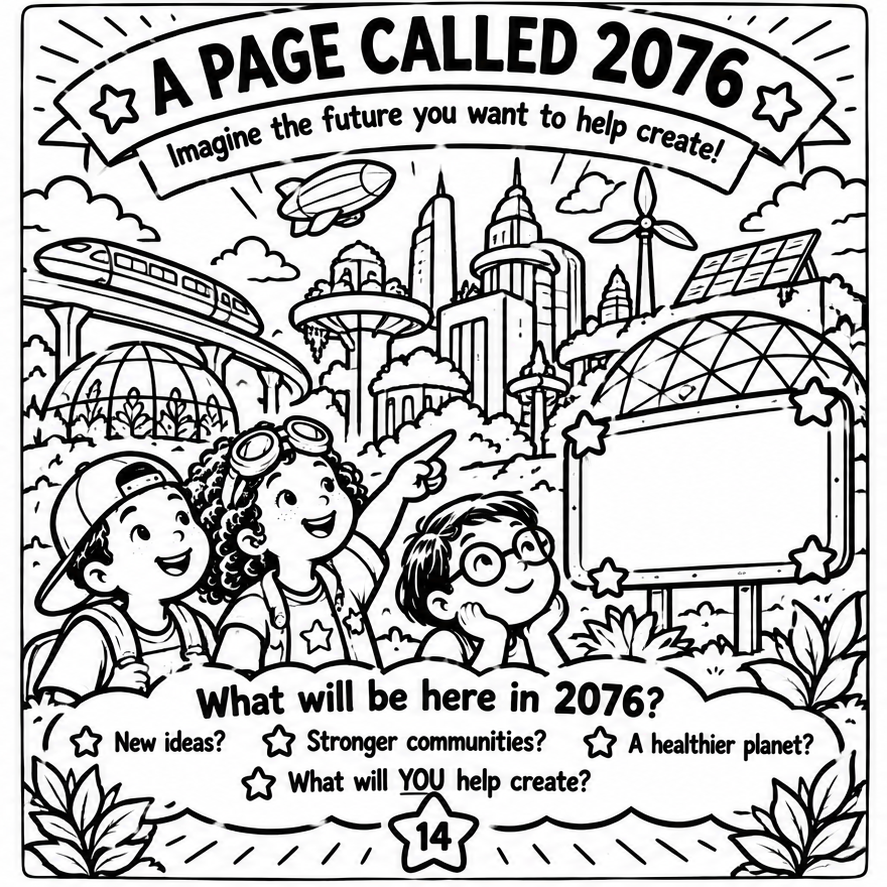
A Page Called 2076
America will turn 300 in 2076. What kind of future would you like to help create?
The next chapter is not something children simply inherit. It is something they notice, question, imagine, build and remember together.
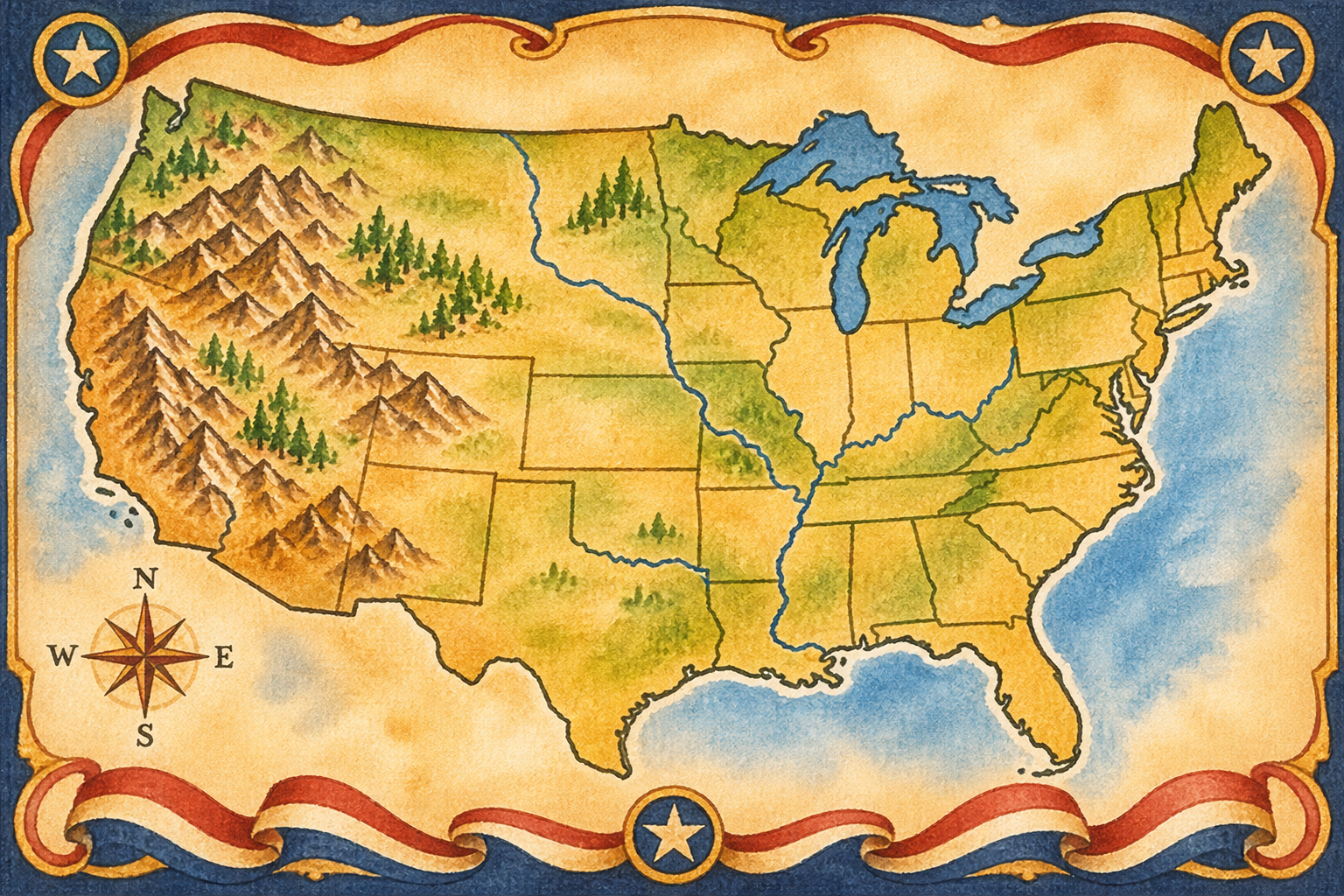
Where do stories live?
In places, families, neighborhoods, objects and memories. History is bigger than a timeline.
What will you add?
The world stays unfinished on purpose. Every child should leave knowing there is still room for their ideas.
Keep making history after the live story ends.
The best follow-up is simple: notice something, ask a question, make something, help someone, or carry a story forward. These activities work at home, in class or around a dinner table.
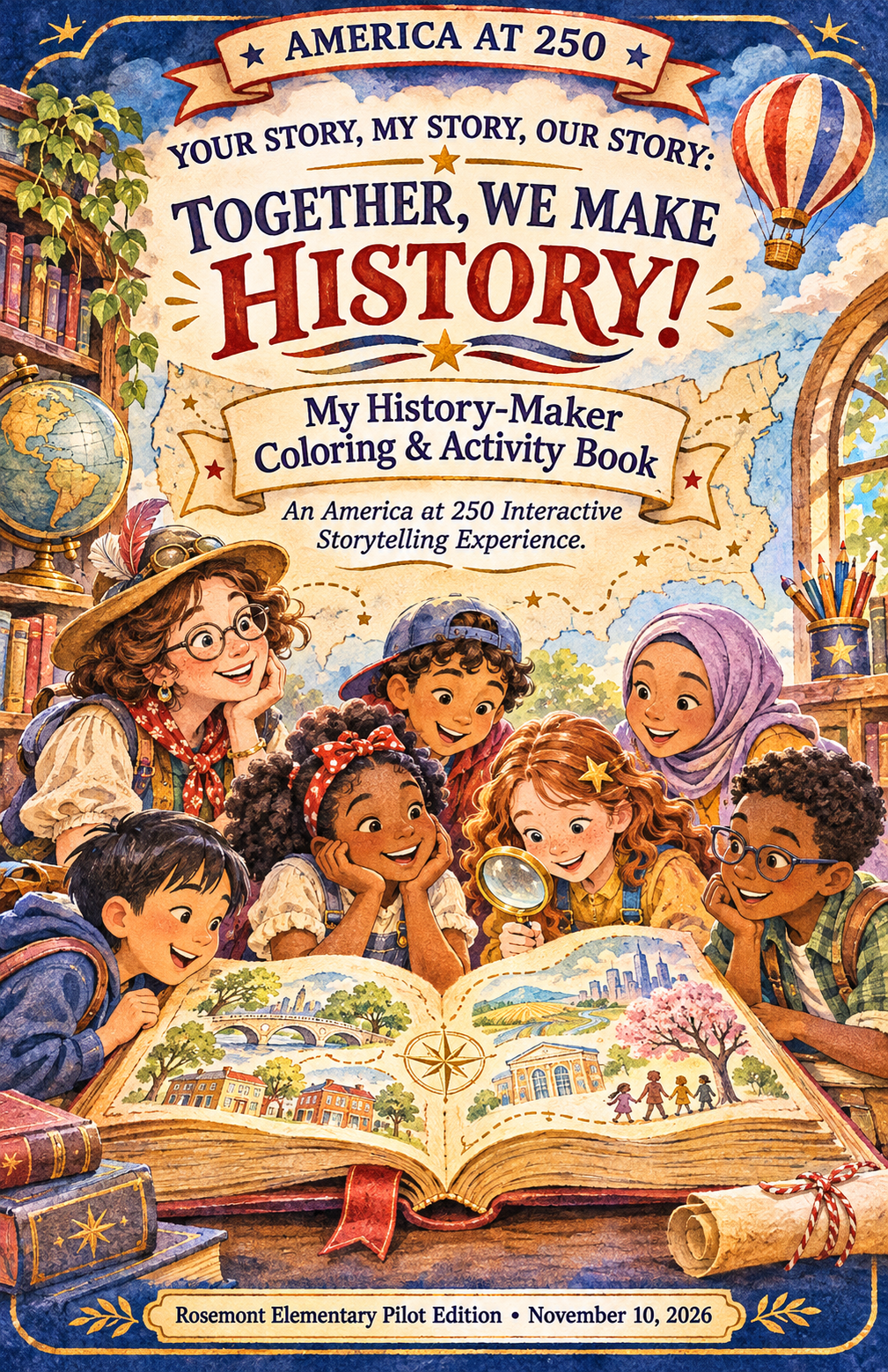
History-Maker Activity Book
Color, draw and finish the story. The pages are designed to leave room for children to add their own ideas instead of only filling in ours.
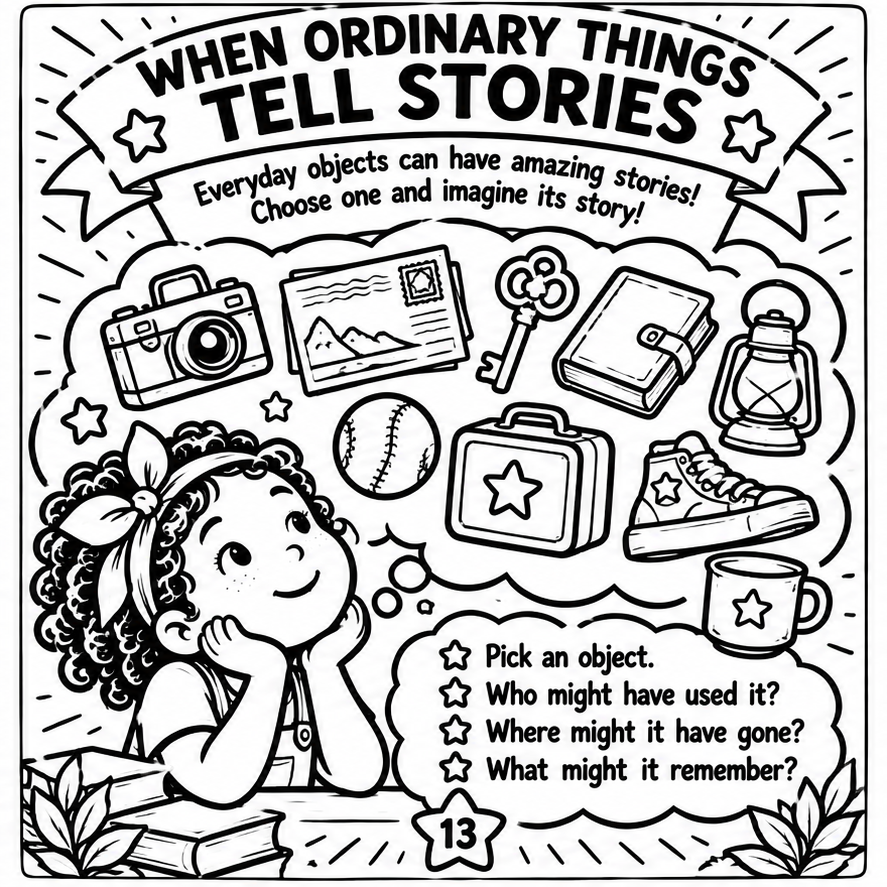
Ordinary Things Tell Stories
Pick one everyday object and investigate it like a History Detective. A key, recipe card, shoe, photograph or notebook can become evidence.
Ask a Bigger Question
Give students an object, image or short story. Ask them to separate what they can observe from what they are guessing.
Ask Someone What They Remember
History also lives in families and communities. Invite a child to ask a grown-up about school, work, celebrations, games, neighborhood changes or something they helped build.
Teachers, librarians and community educators
Use these ideas as quick follow-up activities now. The fuller History Maker Field Guide and classroom materials are part of the expanding Together, We Make History learning world.
Bring the story into the room.
Together, We Make History is an interactive theatrical learning experience that turns students from audience members into investigators, decision-makers, storytellers and future history-makers.
This is not a lecture or historical reenactment. Students investigate, vote, move, create, narrate, question and change what happens in the theatrical experience.
Interactive Assembly
Approximately 35–45 minutes of participatory storytelling, object investigation, movement, audience choices and past → present → future connection.
Two-Age-Band School Day
Two presentations adapted for younger and older learners, with concrete movement and object play for younger students and deeper evidence/inference questions for older groups.
Assembly + History Maker Lab
Add a 45–60 minute hands-on workshop using objects, oral-history questions, mini museum thinking, storytelling and student-created responses.
Library / Museum Family Program
A mixed-age version designed for families and community audiences, with the same History Maker Keys and more flexible participation.
What students actually do
- Analyze ordinary objects as historical clues
- Separate observation from assumption
- Make whole-room choices
- Participate in storytelling and improvisation
- Ask oral-history questions
- Explore verified stories of contributors
- Notice visible and invisible teamwork
- Connect past → present → future
- Imagine what 2026 might communicate to 2076
Educational connections: social studies inquiry, historical sources, change over time, civics, speaking/listening, evidence, narrative, theatre, movement and collaboration.
What would this look like at your school?
Tell us your grade bands, approximate audience size, date or season, and whether you want an assembly, two-age-band school day, workshop or family program. We’ll shape the experience around the room and learners.
Portable and adaptable · No projection required · Standard power preferred · Sound can be self-contained · Teacher/staff supervision remains in the room